


Education
Tianjin University drives innovation in high-purity quartz processing
Updated:2025-04-23


A research team from Tianjin University has had a breakthrough in developing high-purity quartz processing technologies, strengthening China’s capacity to supply key materials for photovoltaic and optical communication industries.
Recently, the Ministry of Natural Resources officially identified high-purity quartz as the country’s 174th mineral type, underscoring its strategic importance. Though visually unremarkable, this mineral contains silicon dioxide with a purity of 99.995 percent and plays a critical role in producing solar panel furnace tubes and optical fiber preforms. Its superior thermal resistance, electrical insulation, and optical clarity make it a fundamental component in high-tech manufacturing.
For years, over 90 percent of the world’s supply of high-end high-purity quartz sand has come from a limited number of overseas sources. As demand for the material continues to grow, China has relied heavily on imports to support its high-tech industries. The discovery of high-quality quartz deposits in Henan and Xinjiang has created new possibilities for domestic production. However, the core challenge remains: transforming the raw mineral into ultra-pure materials that meet the rigorous standards required for advanced industrial applications.
This challenge has been met by researchers at Tianjin University’s School of Chemical Engineering and Technology. For decades, the team has developed a chlorosilane-based distillation process that effectively removes trace impurities from quartz at the molecular level, producing polysilicon of exceptional purity. The introduction of a pressure-coupled multi-tower system further reduces energy consumption and supports cleaner, more efficient production. In another key innovation, the team pioneered an integrated reactive distillation technology, which combines multiple processing steps into a single reaction tower. This approach has significantly increased the efficiency of silane production, a crucial compound in solar energy manufacturing. As a result, China now produces over 90 percent of the world’s silane, establishing a strong foundation for the production of granular silicon, an emerging photovoltaic material with production costs around 30 percent lower than traditional methods.
These advancements are expected to raise China’s annual capacity for semiconductor-grade high-purity quartz to more than 50,000 tones, enabling steady progress toward self-sufficiency in mid- and low-end product lines.
“With continuous advances in indigenous technology, China has significantly improved its ability to process critical materials from domestically sourced mineral resources, thereby reducing reliance on imports and enhancing the resilience of its industrial supply chains,” said a researcher from Tianjin University. “Ultimately, the true value of a mineral lies not only in the quantity of its reserves, but also in the scientific commitment and technological strength required to realize its full potential.”
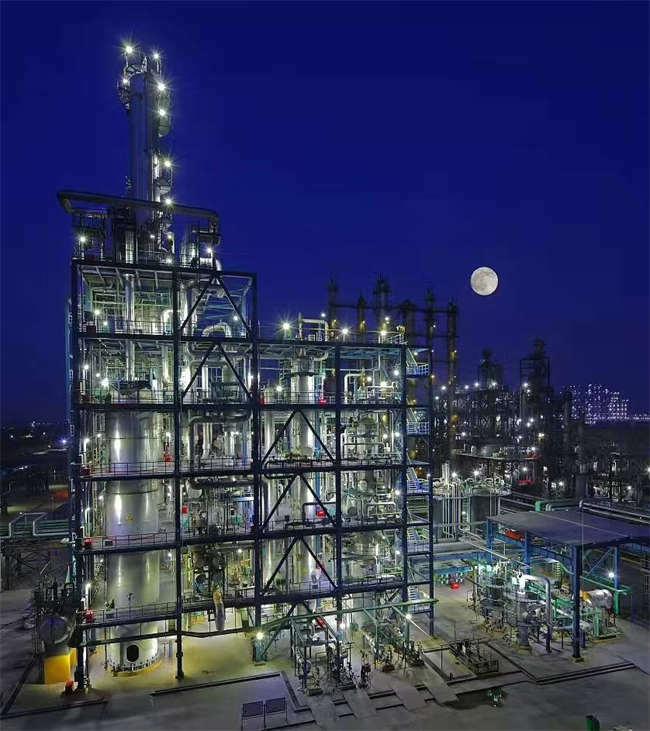
Jiangsu Zhongneng Polycrystalline Silicon Granular Silicon Silane Unit Project
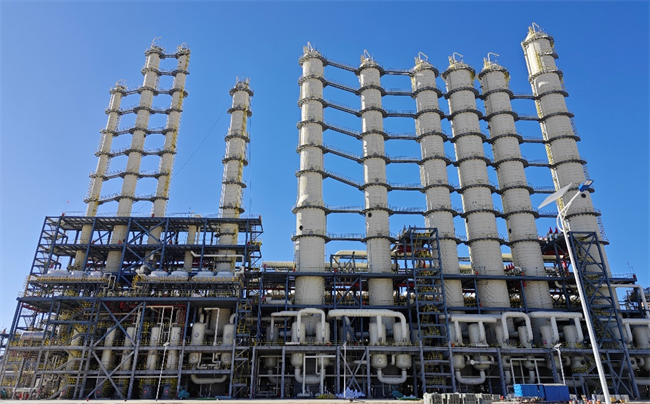
Baofeng Energy 50,000-ton Polycrystalline Silicon Distillation and Off-gas Recovery Project




Copyright 1995 - . All rights reserved. The content (including but not limited to text, photo, multimedia information, etc) published in this site belongs to China Daily Information Co (CDIC). Without written authorization from CDIC, such content shall not be republished or used in any form. Note: Browsers with 1024*768 or higher resolution are suggested for this site.
Registration Number: 130349
- follow us

