


Education
Tianjin University uses DNA tech for grotto mural image preservation
exploringtianjin.com
Updated:2022-09-28


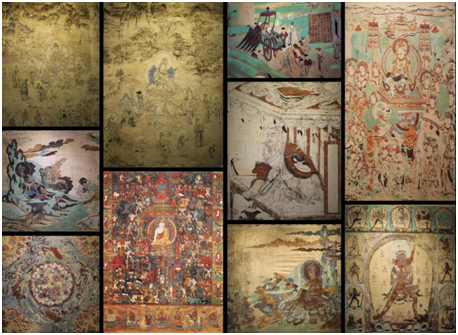
Dunhuang murals stored in DNA.
Researchers led by Yuan Yingjin from Tianjin University have developed a de novo, error-prone strand assembly algorithm that allows mural curators to retrieve data accurately from DNA solutions preserved at 9.4 degrees Celsius without any protection for about 20,000 years.
They enciphered 10 digital pictures of Dunhuang murals into 210,000 DNA strands through the nucleotide sequences in a 6.8 MB zipped file, and they can be precisely recovered from a severely corrupted sample that has been treated at 70 degrees Celsius for 70 days.
The Mogao Grottoes a UNESCO World Heritage Site in Dunhuang city, Northwest China's Gansu province, houses a vast collection of Buddhist artwork, including some 45,000 square meters of murals.
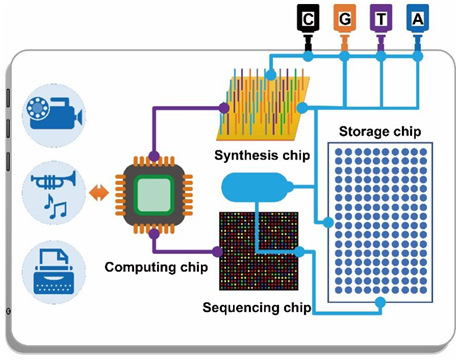
Basic concepts of DNA data storage
They set the strand redundancy at 7.8 percent, which supports reliable data recovery when the decoder receives more than 95 percent of strands, according to the study published recently in the journal Nature Communications.
Previously, Yuan's team designed a yeast artificial chromosome that encodes two pictures and a video clip, and the study findings were published in the National Science Review in 2021.
The latest breakthrough makes DNA one of the most robust memory media that can help protect and pass on cultural heritage, the researchers said.




Copyright 1995 - . All rights reserved. The content (including but not limited to text, photo, multimedia information, etc) published in this site belongs to China Daily Information Co (CDIC). Without written authorization from CDIC, such content shall not be republished or used in any form. Note: Browsers with 1024*768 or higher resolution are suggested for this site.
Registration Number: 130349
- follow us

